
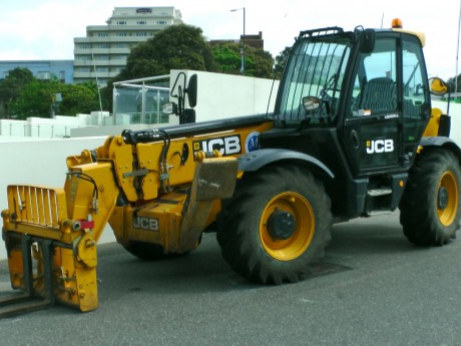
If your business operates lift trucks, tow tractors, stock pickers or specialist equipment, the category changes introduced in January are likely to affect you – and possibly more than you realise.
Across Uckfield and the surrounding area, many businesses rely on forklifts and related equipment every day. But with updated classifications now in place, operator training and certification must reflect the new structure.
This isn’t simply a paperwork exercise. It’s about making sure your team is trained correctly for the exact machines they’re using.
Why the categories have changed
The revised forklift and plant truck categories reflect:
- Advances in equipment design
- Changes in workplace demands
- A move towards clearer and more consistent national standards
In practical terms, training now needs to match both the machine and the environment it operates in more precisely than before.
If you haven’t reviewed your operator categories or training records since January, now is the time to do so.
Key updates now in effect
The following changes are now active:
- The low-level order picker has moved from A2 into a new E0 category within the order picker group
- Reach truck categories D1 and D2 have merged into a single D1 category, with no height restrictions
- The H3 designation within the tow tractor (H category) has been removed, along with weight restrictions
- The J category now includes J1, J3, J5, J7 and J8 only, with no height restrictions
- A new M4 designation has been introduced for the pedestrian operated stacker truck
- A new SP1 category has been created for the vertical stock picker (such as the Crown Wave)
- Testing standards have been updated to align with the revised structure
If your operators trained under the previous system, it’s important to ensure everything remains compliant.
Experience isn’t the same as competence
It’s important to understand that experience on one machine does not automatically mean competence on another.
Specific familiarisation following basic training, and proper conversion training when moving between machines, are essential. Different controls, lifting characteristics, attachments and environments all require appropriate instruction and assessment.
For employers, reviewing the following is now essential:
- Operator categories
- Training records
- Refresher schedules
- Conversion training requirements
Why accredited training matters more than ever
With these updates in place, there has never been a better time to move to fully accredited training.
At ULTS, training is what we do – and we are now CITB approved. Our courses are officially recognised by the Construction Industry Training Board for all telehandler courses that fall within the J category, providing reassurance that your training meets recognised standards.
Accredited training removes the guesswork. It answers key questions:
- Has the correct category been covered?
- Is the training suitable for the tasks being carried out?
- Is the instructor fully up to date with legislation?
- Are refresher intervals appropriate?
Forklifts and cranes are more advanced and more expensive than ever. They operate in busy workplaces, often alongside pedestrians and valuable stock. Last year saw record prosecutions and significant fines following lift truck incidents, and in many cases, inadequate or outdated training was a key factor.
Cutting corners rarely saves money, but it increases risk.
Supporting Uckfield businesses
Proper accredited training equips your staff to work safely, professionally and confidently – protecting your people, your stock and your business reputation.
If you’d like guidance on how the new forklift categories affect your operation, we’re here to help.
You can also sign up to our monthly newsletter and follow us on social media for practical updates on compliance, training standards and industry developments.